
Call for help with condo, apartment, rental, HOA, and multi-unit water damage from plumbing, appliances, roofs, bathrooms, or neighboring units.
What to do right now
- Notify the landlord, property manager, HOA, or building maintenance contact as soon as possible.
- Stop the source if it is inside your unit and safe to entry.
- Photograph your unit and any shared walls, ceilings, hallways, or units below if visible.
- Keep a record of calls, entry windows, and who authorized work.
How cleanup is usually handled
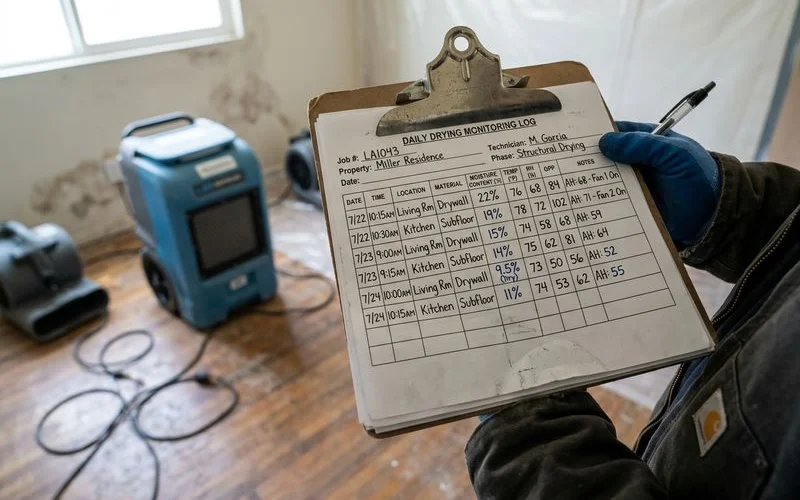
- Moisture mapping should include shared walls, ceilings below, and adjoining units when entry is available.
- Documentation helps clarify what was wet, who had entry, and what mitigation was done.
- Drying setup may need quiet hours, tenant entry, parking, elevators, and manager coordination.
What affects cost and insurance
Cost depends on entry, number of units affected, source responsibility, building rules, material removal, and drying time.
Apartment losses can involve renters insurance, landlord insurance, HOA master policies, or neighbor policies. Documentation is especially important.
What helps us understand the job
Share the address area, source of water if known, when it started, whether water is still active, what rooms are affected, whether any occupants have health concerns, and whether insurance or a property manager is involved.
Related services
For broader cleanup, see water damage restoration in Los Angeles. If odor or visible growth appears after a leak, review mold after water leak cleanup or mold remediation.