
This page fits supply-line breaks, pinhole leaks that suddenly opened, ceiling leaks from an upstairs pipe, and wall or cabinet water from plumbing failures.
What to do right now
- Turn off the nearest fixture valve or main water shutoff if safe.
- Avoid electrical fixtures and wet ceiling areas until the space is checked.
- Call a plumber for active pipe repair and a restoration team for wet materials and drying.
- Take pictures of the pipe area, water path, affected rooms, and damaged contents.
How cleanup is usually handled
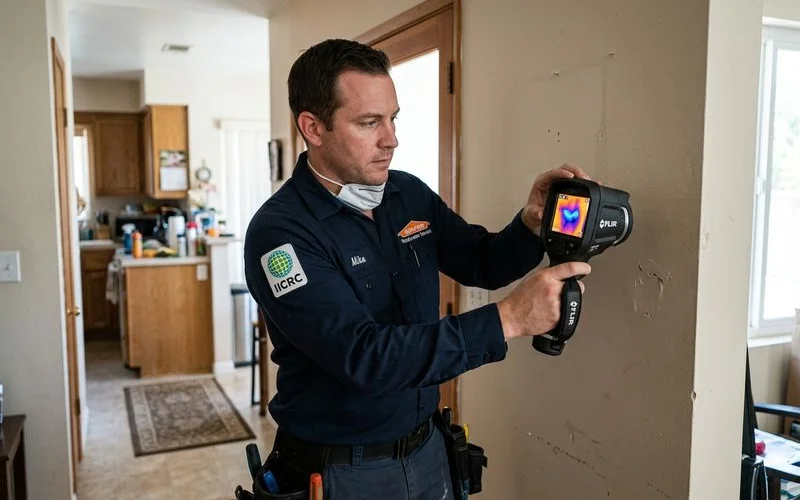
- Moisture mapping checks walls, baseboards, flooring, and cabinets around the pipe path.
- Extraction and drying equipment are placed to target trapped moisture, not just visible puddles.
- If materials are removed, the estimate should document why removal was needed.
What affects cost and insurance
Cost depends on water volume, rooms affected, material type, drying days, demolition needs, and whether rebuild is part of the same claim.
Burst pipes are commonly treated as sudden-and-accidental losses, but every claim depends on policy terms, maintenance history, and cause documentation.
What helps us understand the job
Share the address area, source of water if known, when it started, whether water is still active, what rooms are affected, whether any occupants have health concerns, and whether insurance or a property manager is involved.
Related services
For broader cleanup, see water damage restoration in Los Angeles. If odor or visible growth appears after a leak, review mold after water leak cleanup or mold remediation.