
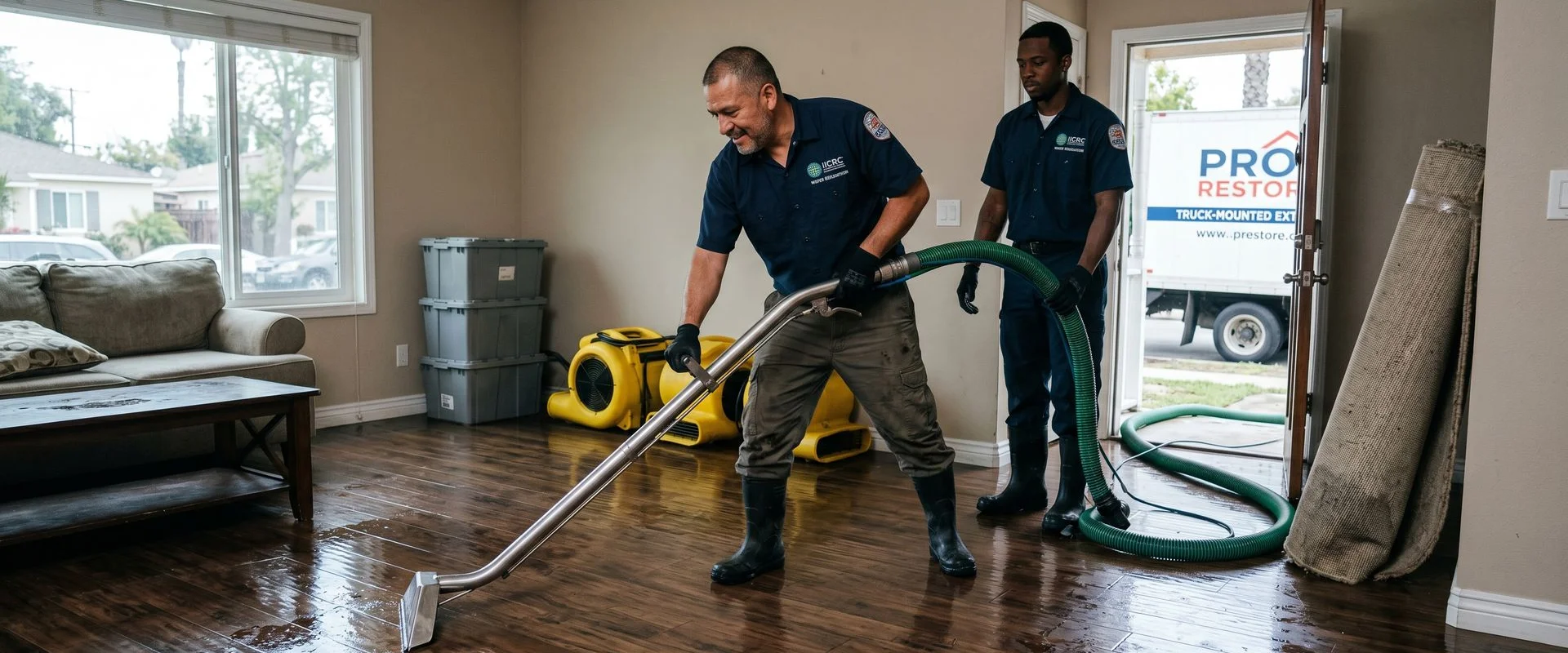
This page fits calls where water is still on the floor or has just been removed, but flooring, baseboards, drywall, or cabinets are still wet.
What to do right now
- Shut off the water source if you can do it safely, such as a fixture valve or main shutoff.
- Stay out of rooms where water may contact outlets, cords, appliances, or breaker panels.
- Move small valuables from wet areas, but avoid lifting soaked carpet or cutting materials before pictures are taken.
- Take wide pictures of the room, source, hallway, and affected rooms for insurance documentation.
How cleanup is usually handled
- Extraction removes standing water first, then moisture mapping shows how far the loss traveled.
- Air movers and LGR dehumidifiers are placed based on material type, not just room size.
- Daily moisture checks help decide whether materials can dry in place or need removal.
What affects cost and insurance
Cost depends on the amount of standing water, how long materials stayed wet, whether walls or cabinets are affected, and whether the job is insurance related. A small clean-water extraction is very different from a multi-room loss with wet drywall or contaminated water.
Sudden-and-accidental losses such as supply-line breaks or appliance failures are often reviewed by insurance. Coverage varies by policy and cause, so documentation matters from the estimate conversation.
What helps us understand the job
Share the address area, source of water if known, when it started, whether water is still active, what rooms are affected, whether any occupants have health concerns, and whether insurance or a property manager is involved.
Related services
For broader cleanup, see water damage restoration in Los Angeles. If odor or visible growth appears after a leak, review mold after water leak cleanup or mold remediation.