
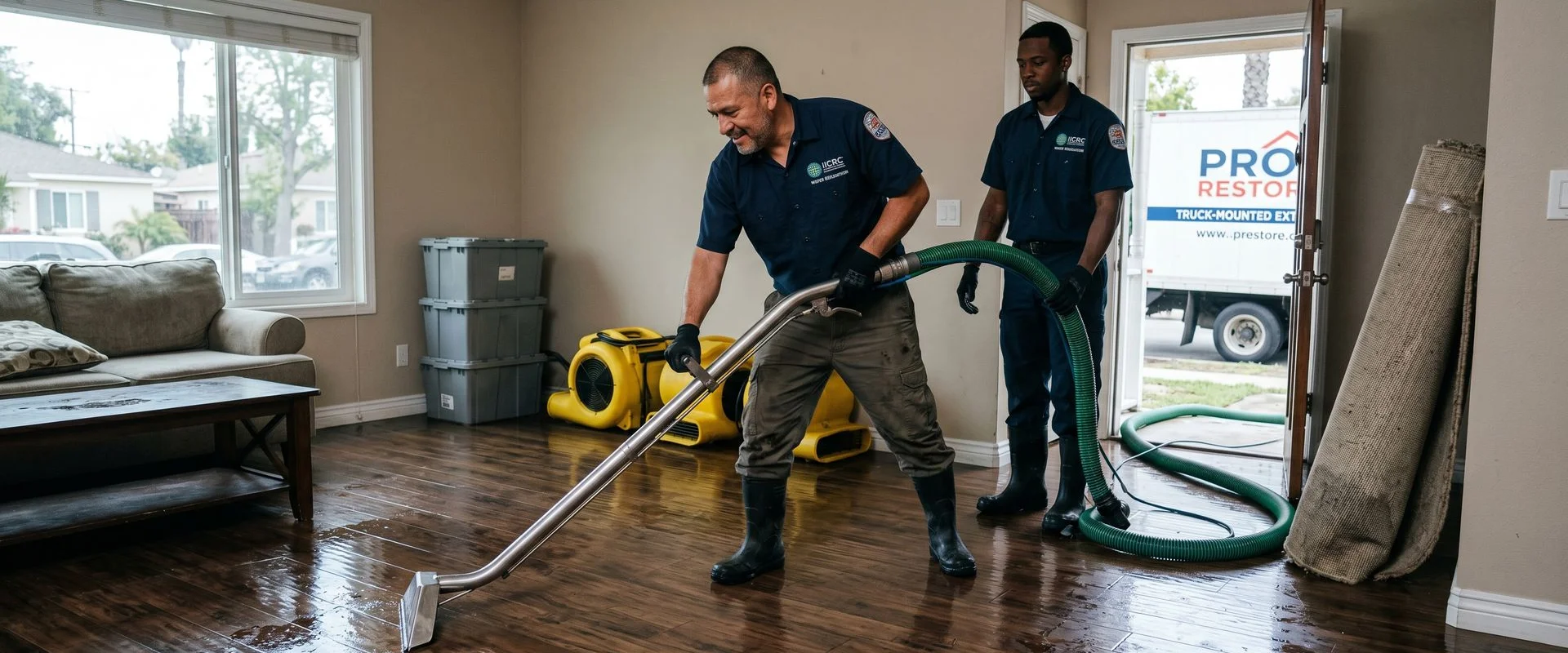
Call for help with toilet backups, sewer line backups, drain overflows, and water that may contain waste, soil, or other contaminants.
What to do right now
- Keep children, pets, and foot traffic out of the affected area.
- Do not use a shop vacuum on sewage or unknown contaminated water.
- If the backup is active, stop using nearby plumbing until the source is controlled.
- Photograph the affected rooms from the doorway without stepping through contaminated areas.
How cleanup is usually handled
- Contaminated porous materials may need removal rather than drying in place.
- Containment and cleaning help prevent cross-contamination into unaffected rooms.
- Drying begins after unsafe material is removed and surfaces are cleaned appropriately.
What affects cost and insurance
Sewage cleanup usually costs more than clean-water drying because containment, PPE, removal, disposal, cleaning, and documentation are more involved.
Sewer backup coverage is policy specific. Some policies require a separate endorsement, so cause documentation and pictures are important.
What helps us understand the job
Share the address area, source of water if known, when it started, whether water is still active, what rooms are affected, whether any occupants have health concerns, and whether insurance or a property manager is involved.
Related services
For broader cleanup, see water damage restoration in Los Angeles. If odor or visible growth appears after a leak, review mold after water leak cleanup or mold remediation.