
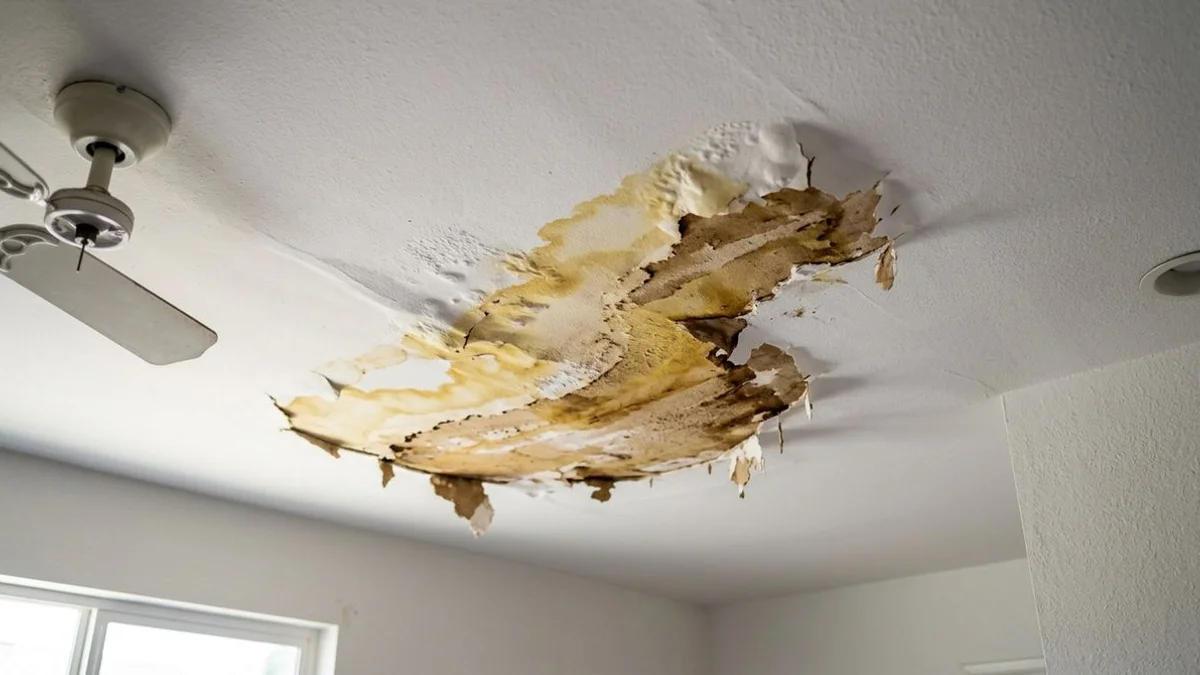
Call for help with ceiling stains, bubbling paint, soft drywall, sagging sections, and recurring moisture after a leak above the room.
What to do right now
- Do not stand under a sagging or actively dripping ceiling.
- Place a bucket only if it can be done safely and without touching wet fixtures.
- Look above the area for bathrooms, kitchens, laundry, roof lines, HVAC, or balconies that may explain the source.
- Photograph the ceiling and the room above before materials are opened.
How cleanup is usually handled
- Moisture meters and moisture checks help decide whether the ceiling can dry or needs removal.
- If the source is active, plumbing, roofing, or HVAC repair comes before finish repair.
- Stain blocking and repainting should wait until moisture readings are dry and stable.
What affects cost and insurance
Cost depends on source entry, ceiling height, wet insulation, asbestos testing needs in older materials, drywall removal, drying time, and finish repair.
Insurance may review ceiling damage differently depending on whether the cause was sudden, repeated, storm-related, or maintenance related.
What helps us understand the job
Share the address area, source of water if known, when it started, whether water is still active, what rooms are affected, whether any occupants have health concerns, and whether insurance or a property manager is involved.
Related services
For broader cleanup, see water damage restoration in Los Angeles. If odor or visible growth appears after a leak, review mold after water leak cleanup or mold remediation.